 Place Arago
I arrived in Perpignan - Perpinyà in Catalan - on Monday afternoon after an overnight detour through Paris (thank you, Eva!) due to massive train strikes in the south - particularly in the part of the south I was heading to. No trains were going there, non trains were leaving there, and it was the beginning of vacation for about 1/3 of France (and the beginning of the second week for another 1/3!). By the time I arrived in Perpignan, I was very thankful I had made it, and even more thankful I didn't have to ride on a train for at least three days!
Perpignan was slightly overcast, but still warm - probably in the high 50s-low 60s. I decided the best way to counter-act ~6 hours on an itty bitty bar stool on a train was to walk. And walk I did. I spent the whole afternoon first getting my bearings, and then exploring all the sites listed in my Lonely Planet and on the map from the tourism office.
Hotel de Ville
The city hall is notable for the three iron arms that stick out from the front side. They represent the three classes of society during the Middle Ages. The largest: the haute bourgeoisie; the medium: merchants, cloth-makers, doctors, and notaries; the smallest: gardeners and independent artisans.
 Le Castillet
The Castillet was once both a city gate and city prison. Currently, it houses the Catalan Arts and Traditions Museum. Being so close to Spain (less than 40km to the border, and less than 200km to Barcelona) there is a very strong Catalan influence on the region. All the street and road signs are written in French and Catalan, and most everyone in the area speaks French and Spanish or Catalan, or both.
In addition to Perpignan feeling much more "mediterranean" than anywhere north of, say, Lyon, it's not even the mediterranean culture that sticks out. There's a significant Spanish feel. I was told, too, that people don't usually visit Perpignan just to visit Perpignan, they usually pass through on the way to Barcelona.
 Le Castillet
 Cloister-Cemetery of St-Jean-Baptiste
Now, depending on the source, I read that the cloister-cemetery in Perpignan is either a) the largest and oldest in France, or b) the only cloister-cemetery in France. I'm not sure which is actually the case, but I for one had never so much as heard of a cloister-cemetery before this one. It's not really a complicated concept - basically the cathedral's cloister also serves as a cemetery, with a different carved figure or epitaph in each arch of the cloister. In Catalan it's called the Campo Santo.

Cathédrale Saint-Jean-Baptiste
This is the cathedral to which the cloister-cemetery is connected. It's known for its wraught iron bell tower, which seems to be a typical style in the whole region, since I noticed several more towers like this one during my travels. This one, however, was certainly the most detailed and elaborate - others even seemed to be sometimes crooked or slightly misshapen...
 Little, colorful streets...
 Palais des Rois de Majorque
Palau dels Reis de Mallorca
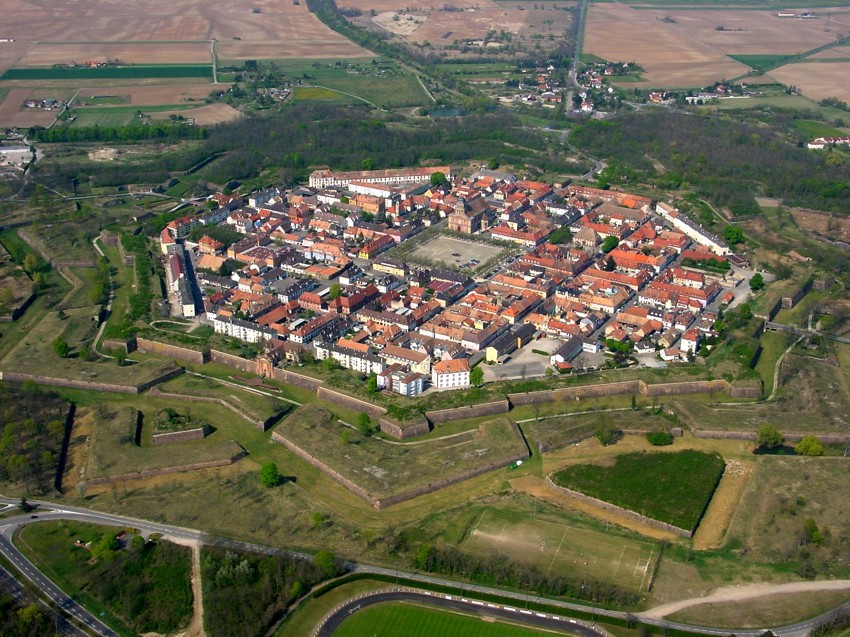
Strategically constructed on the highest point in Perpignan (not too hard when the ocean is only a couple of kilometers away) from 1276-1309, the king, Jaume II (James) of Mallorca, made Perpignan his capital. The palace itself is constructed around a main courtyard, and the entire thing was enclosed in a citadel in the late 1600s by noted French architect, Vauban. (Go here and here for a picture of classic Vauban style.)
 View over Perpignan
 Aula, or Great Room
This is the Great Room of the palace, with three huge hearths at one end. This place was a real palace, in the fairy tale sense, in that the kings and queens actually lived here, held court here and ruled over their kingdom.
 Chapelle Sainte-Madeleine
 L'Ancienne Université
Back in the center of town, I continued to explore the winding, old streets.
 La Mer Méditerranée, Canet-Plage
I finished the day with a quick trip to the windy beach. It was cool, and the beach was deserted, but it was nice to see the sea.


No comments:
Post a Comment