Wednesday, April 14, 2010

Vacation Day 3: More Castles!

Le château de Puilaurens

This castle, called Castèl de Puèglhaurenç in the regional dialect, Occitan, was originally of Aragonese possession (so, Spanish, not French) and provided shelter to those fleeing the French forces during the crusade. It dates to the first decade or so of 1200s.

Entrance

Interior courtyard and remains of structures

Courtyard

Dungeon, chapel and still-standing dwellings

Into the dungeon

View from the tower

Le château de Quéribus

The castle Quéribus is another border-protector along the former Franco-Spanish border. It is also known as the last Cathar stronghold, since those who were able to survive and escape Montségur made their way to Quéribus. After a short three-week siege in 1255, the castle fell to the crusading forces.

Main structure and dwelling

Vaulted room

Outside the salle du pilier and the spiral staircase tower

The pilier in the center of the room

View from Quéribus

Le château de Peyrepertuse

Within sight of le château de Quéribus is this huge castle, Castèl de Pèirapertusa in Occitan. It's name means "pierced rock," and this castle, like the others, was a border castle.

Lower section, from above

The older, lower section was built by the kings of Aragon (Spain) and dates from before 1000.

Upper section, from below

The upper part of the castle was built some 200 years after the lower, this time by French king Louis IX in 1242.

Escalier Saint-Louis

The Saint Louis Staircase connects the two sections of the castle and is named for Louis IX, who is the only canonized French monarch, and was seen as "the model of the ideal Christian monarch."

Dwelling ruins

Chapelle Saint-Jordi

Named after the rock atop which it perches, Sant Jòrdi, this is the highest point of the castle. The view is stunning!

Le château d'Aguilar

This castle is the smallest and least-visited of the major border castles. Built in the 1100s and 1200s, the castle is made up of two protective walls, one within the other. Despite being in much worse condition than the others along the border (due to significantly less funding), this was one of my two favorite castles of the two-day adventure. I really like the small and intimate feeling. The remains of the towers, with their various-styled archer's windows and other visible means of defense was interesting to see, all packed into one small fortress.

Chapelle Sainte-Anne

Chapelle Saint-Anne

Inside the inner wall

Dwelling and dungeon structures

My other favorite of the excursion was the first one of the day: Puilaurens. It was just a magnificent structure, and being there in the morning sun just can't be topped!

Tuesday, April 13, 2010

Vacation Day 2: Castles!

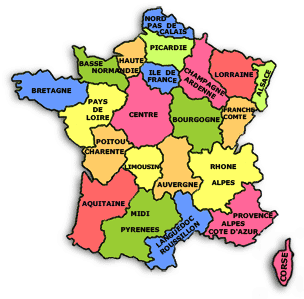
Tuesday morning dawned sunny in Perpignan and I picked up my rental car and hit the road. I had planned a two-day excursion west from the coast, into the heart of the Languedoc, across the département of the Aude, with a little dip into the neighboring région, Midi-Pyrénées, in the département of the Ariège.

Driving on small routes, first through sun-baked, red-earthed vineyards, then through narrow mountain passes with astonishing cliffs jutting up on one side of the road, and plunging down on the other side, and also through green, green valleys, was one (surprising) highlight of the vacation. I was so happy to explore in this new way, more or less free to do what I wanted and go where I wanted. I was happy not too many other cars were on the roads, and I could take my time - both for sight-seeing and so I wouldn't careen off the road on any one of the hundreds of sharp switch-backs! It was both thrilling and relaxing at the same time.

The point of my two-day adventure was to visit a bunch of medieval castles - or more frequently their ruins. Now, without getting into an extensive history lesson here, these sites are of interest because of their long and often complicated history involving catharism, the Albigensian Crusade, and later the protection of the southern French border with Spain. First, the Cathars were a religious sect that developped primarily in the Languedoc region in the 1000s and lasted mostly through the 1200s. Their religious principles put them at odds with the Catholic Church, and the Church's desire to get rid of the heretics led to the Albigensian Crusade, from 1209-1229. This crusade is unique in that it was the only one faught on European soil, by Europeans against Europeans. Long story short, people were tortured, villages and castles sieged, and eventually it was declared that the heresy was wiped out, and by the end of the 1400s, records of inquisitorial action against Cathars basically stop.

After the Crusade, many formerly Cathar fortresses were turned into border fortresses, and more fortresses were built, serving as border protection along the Franco-Spanish border, which until 1659 was much further north than current day. With the signing of the Treaty of the Pyrenees in 1659, the border was pushed back to where it is today, along the peaks of the Pyrenees Mountains.

Le château de Montségur

Situated on a pog, from the Occitan (dialect of the region) word for "peak," Montségur is a bit of a hike up a steep and rocky path. Aside from the volumes of history that have been written about this place, what impressed me the most was how it was even possible for people to construct a fortress and village on this peak. I mean, we're talking way pre-Industrial Revolution! Plus, the fortress that remains today is not the first (pre-1200), nor even the second (1210), but the third built on that site. Not only did they construct the fortress, but some 200+ people lived in the mountain-top village, and took refuge within the castle walls during four sieges. The first three (1212, 1213, 1241) were never successful, but the fourth, started in 1242, lasted until 1244 when the besieging forces finally overtook the fortress and burned at the stake 220 Cathars.

Northwest tower containing the dungeon and cistern

Southern wall, built right into the natural rock formations of the pog.

Dungeon and cistern

Dungeon and cistern

Remains of the village perched outside of the north wall of the castle

View from the pog

Memorial to the Cathars burned at the stake in 1244

Castle ruins #2 was, for me, a really incredible place to visit because I first read about this itty bitty village in a medieval history class sophomore year. The village of Montaillou was the subject of an extensive inquisition in the early 1300s, when the local bishop decided this "last bastion" of heresy needed to be put to an end. In 1309 the entire village was arrested and questioned on every minute detail of their lives, and their testamonies were faithfully recorded. It just so happened that this bishop then went on to become Pope Benedict XII, and he brought the written records from his inquisition in Montaillou to the Vatican with him. Thus, they were preserved.

It is extremely rare that such detailed and complete records of daily life in the Middle Ages have been conserved until the modern day. In the mid 1900s, French historian and author, Emmanuel Le Roy Ladurie wrote a "microhistory" of the village based on the preserved testamonies, in which he synthesized the information and layed out a (sometimes painfully) detailed picture of life in Montaillou from 1294-1324. We used this work in class sophomore year, and I'm currently reading the original (and complete) French version.

Ruins of le château de Montaillou

The barely three remaining walls were from the dungeon of the castle

Dwelling remains

Just behind the dungeon walls are low remains of the castle's protective wall, as well as remains of several dwellings located within the walls.

Le château de Montaillou

From the furthest protective wall's remains. This whole hill top would have been enclosed within the castle walls.

Monday, April 12, 2010

Vacation Day 1: Perpignan

Place Arago

I arrived in Perpignan - Perpinyà in Catalan - on Monday afternoon after an overnight detour through Paris (thank you, Eva!) due to massive train strikes in the south - particularly in the part of the south I was heading to. No trains were going there, non trains were leaving there, and it was the beginning of vacation for about 1/3 of France (and the beginning of the second week for another 1/3!). By the time I arrived in Perpignan, I was very thankful I had made it, and even more thankful I didn't have to ride on a train for at least three days!

Perpignan was slightly overcast, but still warm - probably in the high 50s-low 60s. I decided the best way to counter-act ~6 hours on an itty bitty bar stool on a train was to walk. And walk I did. I spent the whole afternoon first getting my bearings, and then exploring all the sites listed in my Lonely Planet and on the map from the tourism office.

Hotel de Ville

The city hall is notable for the three iron arms that stick out from the front side. They represent the three classes of society during the Middle Ages. The largest: the haute bourgeoisie; the medium: merchants, cloth-makers, doctors, and notaries; the smallest: gardeners and independent artisans.

Le Castillet

The Castillet was once both a city gate and city prison. Currently, it houses the Catalan Arts and Traditions Museum. Being so close to Spain (less than 40km to the border, and less than 200km to Barcelona) there is a very strong Catalan influence on the region. All the street and road signs are written in French and Catalan, and most everyone in the area speaks French and Spanish or Catalan, or both.

In addition to Perpignan feeling much more "mediterranean" than anywhere north of, say, Lyon, it's not even the mediterranean culture that sticks out. There's a significant Spanish feel. I was told, too, that people don't usually visit Perpignan just to visit Perpignan, they usually pass through on the way to Barcelona.

Le Castillet

Cloister-Cemetery of St-Jean-Baptiste

Now, depending on the source, I read that the cloister-cemetery in Perpignan is either a) the largest and oldest in France, or b) the only cloister-cemetery in France. I'm not sure which is actually the case, but I for one had never so much as heard of a cloister-cemetery before this one. It's not really a complicated concept - basically the cathedral's cloister also serves as a cemetery, with a different carved figure or epitaph in each arch of the cloister. In Catalan it's called the Campo Santo.

Cathédrale Saint-Jean-Baptiste

This is the cathedral to which the cloister-cemetery is connected. It's known for its wraught iron bell tower, which seems to be a typical style in the whole region, since I noticed several more towers like this one during my travels. This one, however, was certainly the most detailed and elaborate - others even seemed to be sometimes crooked or slightly misshapen...

Little, colorful streets...

Palais des Rois de Majorque
Palau dels Reis de Mallorca

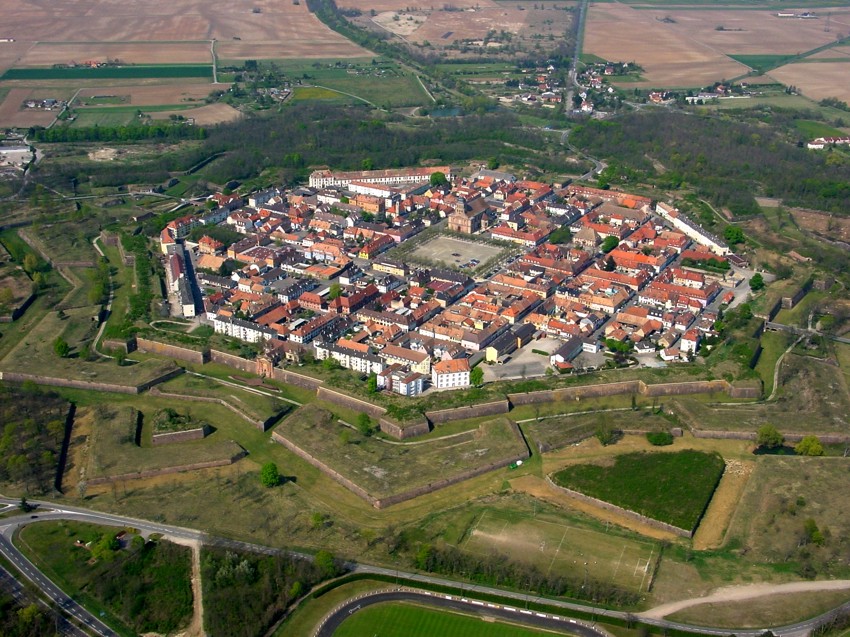
Strategically constructed on the highest point in Perpignan (not too hard when the ocean is only a couple of kilometers away) from 1276-1309, the king, Jaume II (James) of Mallorca, made Perpignan his capital. The palace itself is constructed around a main courtyard, and the entire thing was enclosed in a citadel in the late 1600s by noted French architect, Vauban. (Go here and here for a picture of classic Vauban style.)

View over Perpignan

Aula, or Great Room

This is the Great Room of the palace, with three huge hearths at one end. This place was a real palace, in the fairy tale sense, in that the kings and queens actually lived here, held court here and ruled over their kingdom.

Chapelle Sainte-Madeleine

L'Ancienne Université

Back in the center of town, I continued to explore the winding, old streets.

La Mer Méditerranée, Canet-Plage

I finished the day with a quick trip to the windy beach. It was cool, and the beach was deserted, but it was nice to see the sea.

Sunday, April 11, 2010

April Has 30 Days

April has 30 days. 22 week-days this year.

In Moselle, where the long fingers of the Catholic church still affect the public school system, and where both Good Friday and Easter Monday are public holidays (unlike in the rest of France, where Good Friday is not a jour férié), there are a grand total of 12 vacation days - weekends not included - in April. That means there are 8 teaching days in the primary schools (10 in the middle and high schools - it's the Wednesday thing) in the month of April.

22 week-days
12 vacation days
8 (or 10) teaching days

Really?

Once again, like in every other month where at least two weeks are vacances, I ask myself how it's possible that these kids learn and accomplish anything at all! But they do. And maybe that's why they (and their teachers!) get two-week breaks, to decompress and regroup after so much going on during the weeks between vacations.

After these vacances are over, there are 10 weeks of school left. Total. And no real vacations other than a couple of single jours fériés in May. Something tells me it's going to go by in a flash.

But for now, I'm just starting my two weeks of freedom - celebrated with sun, travel, relaxation, castles and hopefully some beach time as I head south to France's western Mediterranean coast to explore the cities of Perpignan, Narbonne, Béziers and finally, Montpellier. So, expect to hear from me in about a week and a half! Bonnes vacances!

Sunday, April 4, 2010

Day Trippers

Also known as: 1 Day, 3 Countries, No Passport.

Although the "no passport" part was highly unadvised, and really a mere oversight on my part. Fortunately, no passport-checkers were about, and a huge sigh of relief was issued upon returning to Metz!

On to the "three countries" part. Yesterday, three of my assistant friends and I decided to take a day trip to the "oldest city in Germany," Trier. Called Trèves in French, the city isn't far from the Luxembourg border, and brings in tourists from France, Germany, Luxembourg and more. It was a perfect destination for a day trip, since, with a stop-over in Luxembourg City, it only took 2 hours to get there. And the best part is that round trip tickets cost us each only 12€50 thanks to an awesome weekend train pass for the region of Saar-Lor-Lux, as it's called around here. That's the German state of Saarland (even though Trier is technically in the state of Rhineland-Palatinate), Lorraine and Luxembourg. For one person, the ticket is 20€, and 50€ for 4 - all the more reason to travel with friends!

Trier (founded around 16BCE) is a city of superlatives, if I've ever seen one, and nearly every site to see has a particular claim to fame. We started at the Porta Nigra, the largest Roman city gate north of the Alps, which was built - as wikipedia tells me - between 186 and 200CE.

Porta Nigra means "black gate" in Latin


After a short stroll through the pedestrian streets, seeing the city center and getting our bearings, it was more than time to duck out of the drizzle for a hot bite to eat. We quickly found the "Potato Restaurant" and unanimously decided that was the place. I had a delicious schnitzel and kartoffelsalat (potato salad), while the others had equally hearty potato-featuring dishes.

After lunch, we found the Trier Dom and Liebfrauenkirche - the cathedral and Our Lady Church. The Dom is the oldest cathedral in Germany, having been built and rebuilt since the early 4th century. The majority of the cathedral dates from the Roman period, with significant additions being made in the 11th and 12th centuries. And the Liebfrauenkirche was built in the 13th century. It's a massive ensemble of buildings and attached chapels, plus the huge cloister (which we didn't get to see). The Trier Dom has the special significance of being the "home" to the relic of the Holy Robe, or the Tunic of Christ - the garment Jesus was supposedly wearing when he was crucified. Since 1196, the tunic has been contained in a special altar within the cathedral, and has been taken out and displayed a couple of times each century since - the most recent being in 1996.

Trierer Dom und Liebfrauenkirche

My day-tripping companions in front of the medieval city wall

The last major site we visited were the Kaiserthermen, the Imperial Baths (the largest Roman baths north of the Alps). While we didn't pay to enter the museum and site, it was pretty clear from the outside that the remains are quite impressive.

Trier city-center

Two sites we didn't see before we had to catch a train back to France (via Lux) were the Roman amphitheater, a bit outside of the city-center, and the Römerbrücke, the Roman Bridge over the Mosel (Moselle) River. It's claim to fame is being the oldest standing bridge in Germany, with its pillars dating to 2CE. And yet another "north of the Alps" superlative about Trier: in the St. Matthias Abbey a medieval church houses the body of the only apostle buried north of the Alps.

With all these "largest," "oldest," and "most"s, it's easy to get caught up in the touristy part of the trip, but on the train home we kept talking about how amazing it was that we were able to take a simple day trip and spend some time in three different countries with incredible ease (and fortunately no customs officials!). This is such a cool part of the world!